Ninja Air Fryer Pro AF141: A Practical Look at This 5-Quart Model
Introduction
Not every air fryer on the market is trying to be the most feature-packed option available. While plenty of manufacturers have leaned into long lists of specialized presets and elaborate touchscreens, a fair number of households simply want something that handles the basics — frying, roasting, reheating — reliably and without a steep learning curve. That’s a legitimate design philosophy in its own right, and it’s worth understanding on its own terms rather than treating it as a lesser version of a more feature-heavy appliance.
The broader category of air fryers exists to solve a fairly specific cooking problem: how to achieve the crisp, browned texture typically associated with deep frying without submerging food in oil. The solution — fast-circulating hot air inside an enclosed chamber — is now well established across the market. What varies from brand to brand is how that core technology gets packaged: how much capacity is offered, how many functions are built in, and how the whole experience is designed around ease of use. The Ninja Air Fryer Pro AF141 leans firmly toward the simpler, more focused end of that spectrum. This article offers an independent, educational breakdown of what the appliance includes, how it’s constructed, and what might be worth thinking about before it lands on your countertop.
Product Overview
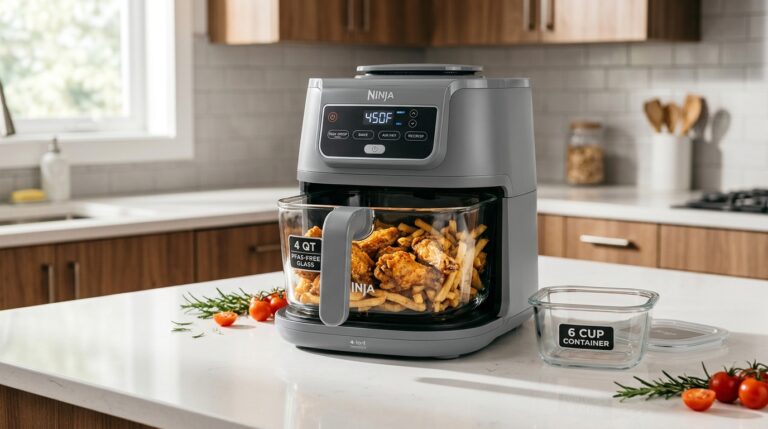
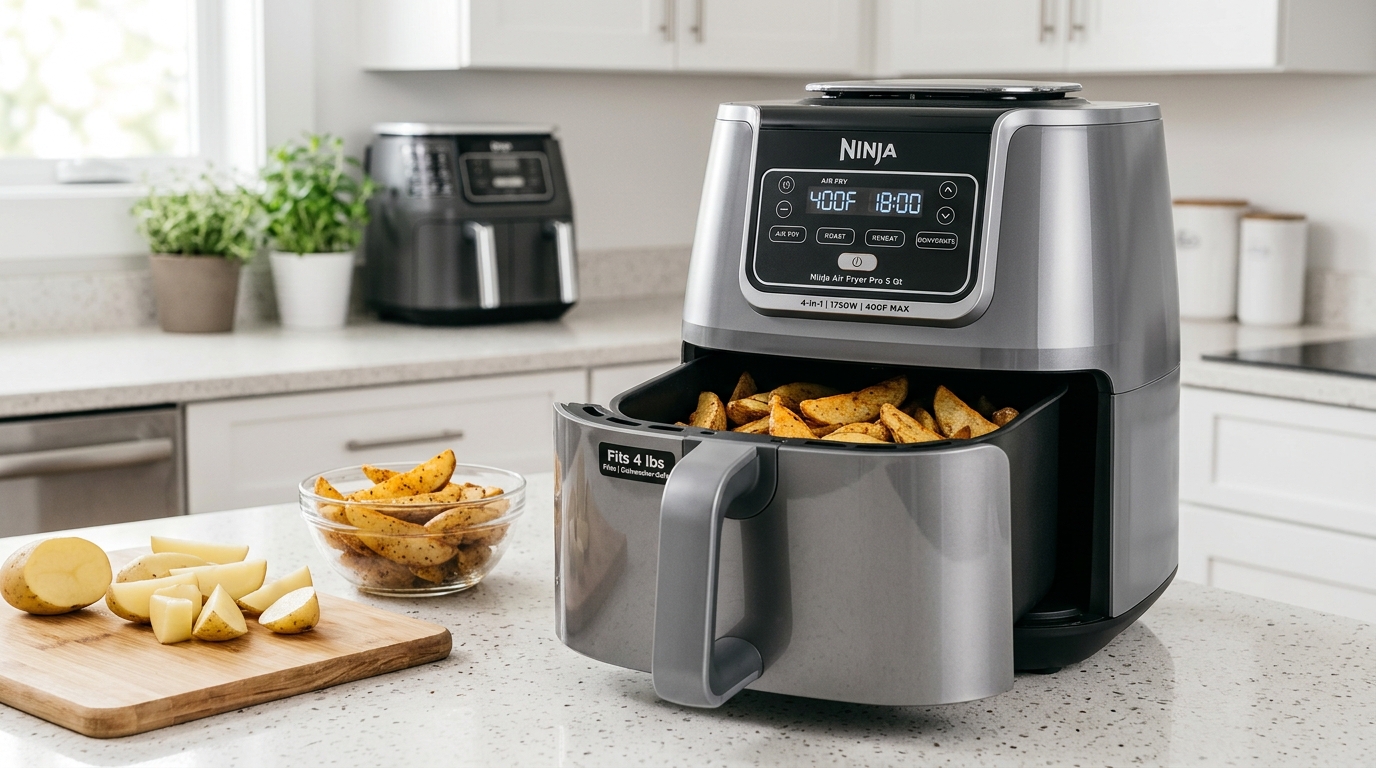
The Ninja Air Fryer Pro is a 5-quart countertop unit built around a 1750-watt heating element, capable of reaching a maximum temperature of 400°F. It’s classified as a 4-in-1 appliance, which reflects its four built-in cooking modes rather than the longer preset lists found on some multi-cookers in the same general category.
Finished in grey, the appliance features a nonstick basket described as able to accommodate roughly four pounds of french fries in one cooking cycle — a relatable, practical way of communicating basket capacity that goes beyond a plain quart measurement. The basket is also designed to be dishwasher safe, which may be a meaningful convenience for anyone who plans to use the appliance on a regular basis.
At its core, this model is built to offer a dependable, moderately sized air fryer suited to everyday cooking — frying, roasting, reheating, and dehydrating — without overcomplicating the control panel with settings most households would rarely touch.
Key Features
Four Core Cooking Functions
The appliance includes four dedicated modes: Air Fry, Roast, Reheat, and Dehydrate. Each is designed to automatically apply appropriate temperature and timing settings based on the function selected, which can reduce the amount of manual adjustment required, particularly for anyone still getting comfortable with air fryer cooking generally.
- Air Fry uses rapid, circulating hot air to produce a crisped exterior, commonly applied to items like frozen snacks, breaded proteins, or vegetables.
- Roast is intended to replicate more traditional oven-style roasting, generally suited to vegetables or smaller cuts of meat.
- Reheat is designed to bring previously cooked food back up to a safe eating temperature while attempting to preserve more of its original texture than a microwave typically allows.
- Dehydrate is built for slow, low-temperature drying over an extended cycle, which may be useful for preparing dried fruit, vegetable chips, or homemade snacks.
1750-Watt Heating Element
The 1750-watt motor and heating system is designed to deliver a reasonably strong power output relative to the appliance’s 5-quart capacity, which may support more even and efficient heat distribution throughout the basket during cooking.
400°F Maximum Temperature
With a ceiling of 400°F, the appliance is designed to cover the majority of standard air frying and roasting needs. That’s somewhat more conservative than some competing models that extend up toward 450°F, though 400°F still tends to be sufficient for most everyday air fryer recipes.
Roughly 4-Pound Fry Capacity
Instead of relying purely on a quart figure, the basket capacity is also framed in more tangible terms — approximately four pounds of french fries per batch. That kind of real-world benchmark can make it easier for buyers to picture how much food the appliance can realistically handle in a single cooking session.
Nonstick, Dishwasher-Safe Basket
The basket’s nonstick coating is designed to minimize food sticking during cooking, and its dishwasher-safe rating may be a meaningful convenience for households that use the appliance frequently and would rather avoid hand washing every time.
Compact 5-Quart Size
At 5 quarts, the unit lands in a middle-ground size category — bigger than the smallest personal air fryers, but noticeably more compact than family-oriented 8-quart-plus models. That balance may make it a reasonably practical fit for smaller households or kitchens without much dedicated counter space to spare.
Materials and Design
The grey exterior is designed to keep a fairly neutral, unobtrusive look, which tends to blend into a variety of kitchen styles without drawing much attention on its own. Its overall shape follows the standard, functional profile that’s become typical of countertop air fryers in this general size range, where usability generally takes precedence over any particularly distinctive visual styling.
The nonstick basket coating is intended to reduce food sticking during cooking — a fairly standard inclusion across most modern air fryers, though the exact coating composition tends to vary somewhat between manufacturers. Its dishwasher-safe design adds a genuinely practical dimension, since not every nonstick basket on the market carries that same rating, and relying exclusively on hand washing can become tedious for frequent users over time.
The control panel keeps things fairly simple, in line with the appliance’s four-function design rather than an elaborate menu of specialized presets. That kind of pared-down interface is generally meant to make the unit approachable, letting users select a clearly labeled function instead of manually adjusting several separate settings for every dish.
Performance
Performance in this category of appliance largely comes down to how evenly hot air circulates through the basket during a cooking cycle. The 1750-watt heating element is designed to provide enough power to support consistent heat distribution across the 5-quart capacity, which may translate into somewhat more uniform results compared to lower-wattage units of a similar size.
The 400°F ceiling suggests the appliance is intended to comfortably manage standard air frying and roasting tasks, even if it doesn’t quite reach the extended high-heat range some competing models offer. As with any air fryer, actual outcomes will still depend on variables like how full the basket is, the specific type of food being prepared, and whether food gets shaken or repositioned partway through cooking to promote more even crisping.
The Dehydrate function works under a different set of performance expectations altogether — operating at much lower temperatures over a considerably longer stretch of time. Success with dehydrating tends to hinge more on patience and proper food prep, such as slicing thickness, than on the raw heating power of the unit itself.
Common Uses
This kind of moderately sized, function-focused air fryer tends to get used for:
- Everyday frying, such as crisping frozen fries, chicken tenders, or vegetables using the Air Fry setting.
- Roasting smaller portions, using the Roast function for vegetables or modest cuts of meat without needing to fire up a full oven.
- Reheating leftovers, using the dedicated Reheat mode intended to restore some texture rather than leaving food soft or soggy.
- Preparing dried snacks, using the Dehydrate function for dried fruit, vegetable chips, or homemade jerky over a longer cooking cycle.
- Small to medium household meals, given the roughly four-pound fry capacity suggesting a fairly practical batch size for regular family cooking.
- Kitchens with limited space, where a 5-quart unit may be easier to fit than a bulkier, higher-capacity model.
Advantages
- Focused, uncomplicated function set: With four clearly defined modes, this appliance may be easier for some users to pick up compared to units offering a longer list of specialized presets.
- Solid heating output: The 1750-watt motor is designed to support efficient, fairly consistent heat distribution relative to the appliance’s overall size.
- Dishwasher-safe basket: This can meaningfully cut down on regular cleanup time compared to nonstick baskets limited to hand washing only.
- Tangible capacity reference: Framing basket capacity in terms of pounds of fries may make it easier for buyers to estimate realistic portion sizes.
- Balanced, mid-sized footprint: The 5-quart size offers a reasonable middle ground between cooking capacity and counter space requirements.
- Simple, approachable operation: The four-function layout may appeal to users who’d rather avoid sorting through an extensive list of presets they may rarely use.
Things to Consider
A few practical points are worth reviewing before making a purchase:
- Lower maximum temperature than some competitors: At 400°F, this model falls short of the 450°F ceiling found on some other air fryers built with a dedicated high-heat mode, which could matter for recipes calling for very high heat.
- Fewer built-in functions overall: With four core modes, this appliance offers less variety than multi-function models that include settings like baking, broiling, or proofing.
- Moderate capacity for larger households: While the roughly four-pound fry capacity is reasonably practical, bigger families or gatherings may still need to cook food in multiple rounds.
- Ongoing basket care: Like most nonstick surfaces, the coating generally benefits from gentler cleaning approaches to help preserve its performance over repeated use, discussed further below.
- Personal texture expectations: As with all air fryers, some people may find the texture of air-fried food noticeably different from deep-fried food. Whether that trade-off feels acceptable really comes down to personal taste rather than any fixed trait of the appliance itself.
Comparison with Similar Product Categories
Compared to air fryers offering a longer list of built-in functions — think dedicated bake, broil, or proofing settings — this appliance takes a more streamlined route with four core modes. That simplicity may suit users who mainly rely on frying, roasting, reheating, and dehydrating, while those wanting broader versatility might be better served by a model with a wider range of presets.
Compared to larger 6-to-8-quart air fryers, this 5-quart model generally offers a smaller overall footprint, which may work better for kitchens with limited counter space, though it may also require more frequent batch cooking for larger households or gatherings.
Compared to air fryers with a higher maximum temperature ceiling — some reaching up to 450°F — this model’s 400°F cap is somewhat more conservative. That’s generally still enough for most standard recipes, but it may fall short for anyone with a specific preference for very high-heat cooking.
Compared to basic, single-function air fryers limited to standard frying, this model’s inclusion of Roast, Reheat, and Dehydrate functions offers a bit more versatility, without venturing into the more complex, feature-heavy territory occupied by some higher-end multi-cookers.
Maintenance and Care
Routine maintenance can go a long way toward preserving both the performance and longevity of this kind of appliance. General care recommendations typically include:
- Letting the unit cool down completely before starting any cleaning, both to protect the nonstick coating and to avoid burns.
- Using the dishwasher-safe basket as intended, which may cut down on the time and effort involved in regular cleanup compared to hand washing every time.
- Wiping down the exterior with a damp cloth to remove grease or food splatter, steering clear of harsh chemical cleaners that could affect the finish over time.
- Periodically checking the interior heating element for stray food debris, since buildup in that area can interfere with airflow and affect cooking consistency.
- Drying all removable parts thoroughly before reassembling or storing the unit, helping to prevent trapped moisture or lingering odors.
- Storing the appliance somewhere dry, ideally with the basket removed or the unit left slightly open to allow for proper air circulation between uses.
Checking the manufacturer’s included instructions remains the most reliable way to maintain both the safety and performance of the appliance over its lifespan.
Frequently Asked Questions
1. What household size is this air fryer best suited for? The 5-quart capacity, with a roughly four-pound fry benchmark, is generally well suited to small or medium households, though larger families may need to cook in multiple batches.
2. What’s the highest temperature this model reaches? It tops out at 400°F, which is designed to handle most standard air frying and roasting tasks.
3. How many cooking functions does this appliance offer? It includes four core modes: Air Fry, Roast, Reheat, and Dehydrate.
4. Is the basket genuinely dishwasher safe? Yes, the nonstick basket is designed to be dishwasher safe, which may simplify cleanup compared to models limited to hand washing only.
5. Can this appliance handle dehydrating tasks? Yes, the Dehydrate function is designed for low-temperature, extended-duration drying, useful for items like dried fruit or homemade snacks.
6. Does this model reach as high a temperature as other air fryers on the market? Its 400°F ceiling is somewhat lower than some competing models offering a dedicated high-heat setting up to 450°F, though 400°F tends to be sufficient for most everyday recipes.
7. How much food fits in the basket at once? It’s designed to hold approximately four pounds of french fries in a single cooking cycle, offering a practical reference point for typical portion sizes.
8. Does the Reheat setting help bring back texture in leftovers? It’s designed to restore food to a safe eating temperature while aiming to preserve more of its original texture than reheating methods like microwaving.
9. Is preheating something I need to do before cooking? This can vary depending on the specific recipe and food type, so checking the included instructions is generally the more dependable approach.
10. Does the basket need any special cleaning products? A soft sponge and mild dish soap generally work fine for hand cleaning, and the basket’s dishwasher-safe design offers added flexibility as well.
11. Would this work well for a larger family? It can, though the 5-quart capacity may mean preparing food in multiple batches rather than fitting everything into a single cooking cycle.
12. Does this appliance require any special ventilation in the kitchen? As with most countertop cooking appliances, reasonable airflow around the unit is generally a good idea, alongside whatever standard kitchen ventilation is already in place.
Final Thoughts
The Ninja Air Fryer Pro AF141 represents a more streamlined corner of the air fryer market, built around four dependable cooking functions rather than an extensive menu of specialized presets. With a 1750-watt heating element, a practical four-pound fry capacity, and a dishwasher-safe nonstick basket, it’s designed for households that want consistent, everyday performance without unnecessary complexity built into the control panel.
As with any kitchen appliance, whether this particular model is the right fit ultimately comes down to factors like typical portion sizes, how much variety is wanted in built-in functions, and how much counter space is realistically on hand. Reviewing the manufacturer’s specifications and included instructions ahead of time can help set clear, realistic expectations before use.