Ninja Crispi Glass Air Fryer FN101GY: An In-Depth Look at Features and Function
Introduction
Most of the air fryer conversation over the past several years has centered on capacity, wattage, and how many functions a given unit can pack into its control panel. Less attention has gone to a more basic design question: what’s the basket actually made of, and does that material choice matter beyond just avoiding certain non-stick coatings? For a segment of shoppers, it turns out the answer is yes — and that’s the specific niche this model is built around.
Glass cooking vessels have long been a preferred option in ovens and microwaves for people who want to see their food cooking, avoid certain coated surfaces entirely, and use a container that can transition more easily between the appliance, the table, and the fridge. Air fryers, by contrast, have almost universally relied on coated metal or plastic baskets, largely because glass introduces its own set of engineering challenges around weight, heat resistance, and airflow. The Ninja Crispi Glass Air Fryer represents an attempt to bring that glass-container approach into the air fryer category specifically. This article offers an independent, educational look at what the appliance provides, how it’s constructed, and what might be worth thinking through before it becomes part of a kitchen routine.
Product Overview
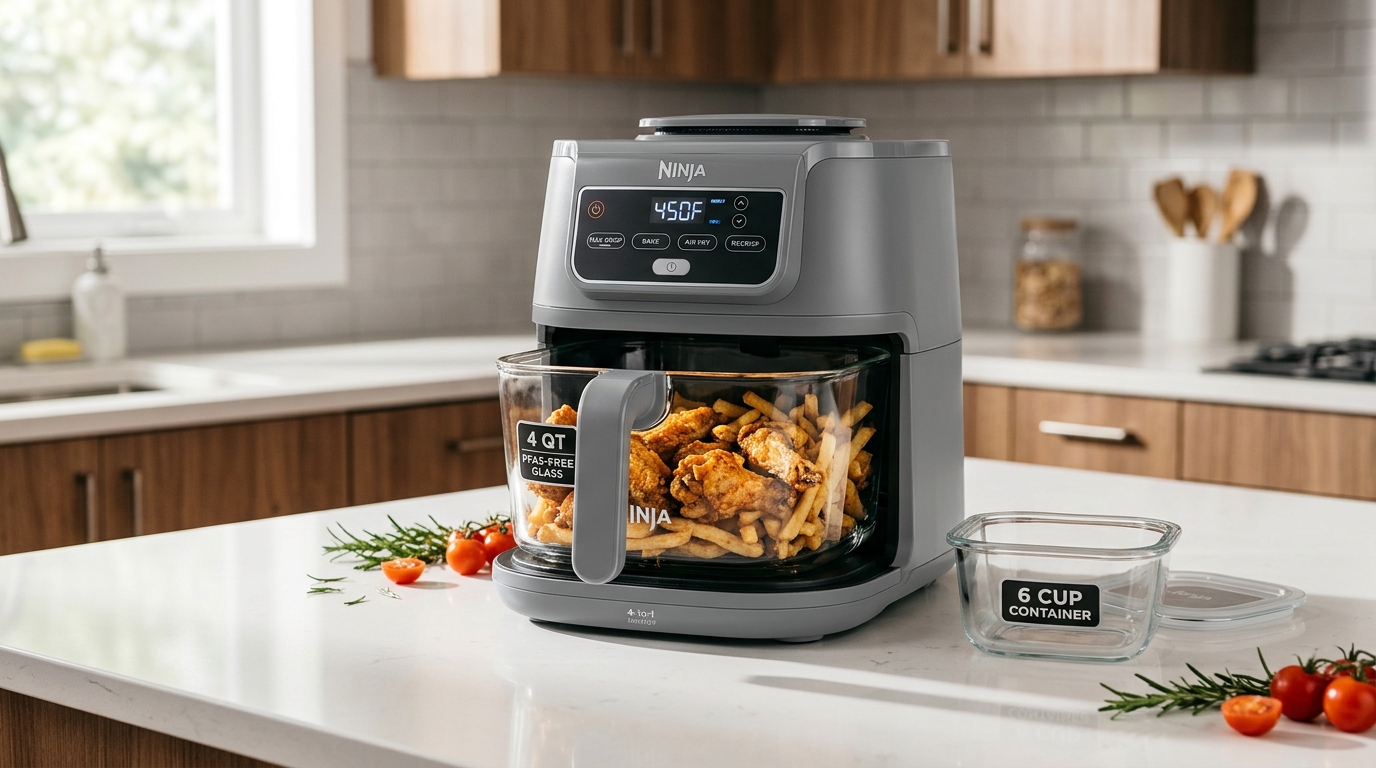
The Ninja Crispi is a compact air fryer built around a fundamentally different design choice than most of its competitors: PFAS-free glass containers instead of a traditional coated metal or plastic basket. It’s classified as a 4-in-1 appliance, with a maximum operating temperature of 450°F, and it includes two differently sized containers — a 4-quart option and a 6-cup option — allowing some flexibility in batch size depending on what’s being prepared.
Finished in grey, the unit is designed around the idea that a glass cooking vessel can offer certain practical advantages over conventional basket materials, particularly for anyone specifically looking to avoid non-stick coatings altogether rather than simply choosing a PFAS-free version of one. Its core purpose is to provide a smaller-footprint air fryer that pairs its function set with a genuinely different container material, rather than distinguishing itself primarily through capacity or an extensive list of specialized presets.
Key Features
Glass Container Construction
The defining feature of this appliance is its use of PFAS-free glass containers rather than a coated metal or plastic basket. This is designed to appeal specifically to buyers who want to avoid non-stick coatings of any kind, not just those formulated without certain synthetic chemicals. Glass containers are also generally microwave and oven safe in many cases, which may add flexibility for reheating or storage beyond the air fryer itself, though checking specific care instructions for this model is advisable.
Four Core Cooking Functions
The appliance includes four modes: Max Crisp, Bake, Air Fry, and ReCrisp. Each is designed to automatically apply appropriate temperature and timing settings based on the selected function.
- Max Crisp is designed as a higher-intensity setting intended to produce a notably crisp exterior, generally suited to foods where texture is the primary goal.
- Bake is intended for smaller baking tasks that don’t require a full-sized oven.
- Air Fry is designed for general-purpose crisping using rapid, circulating hot air, suited to a wide range of everyday foods.
- ReCrisp is specifically designed for reheating leftovers in a way that restores some of their original texture, rather than leaving previously crispy food soft or soggy the way a microwave often does.
Two Container Sizes: 4 Qt and 6 Cup
Rather than offering a single fixed capacity, this model includes both a 4-quart container and a smaller 6-cup option. This may be useful for households that want flexibility between preparing a full meal and cooking a smaller portion without using a container that’s oversized for the task.
450°F Maximum Temperature
With a top temperature of 450°F, the appliance is designed to accommodate higher-heat cooking tasks like crisping and baking, alongside its standard air frying function.
Dedicated ReCrisp Function
The inclusion of a specific ReCrisp setting, separate from the general reheat approach found on many other air fryers, is designed to specifically target the texture restoration that leftovers often need, particularly for foods that were originally crispy and have since softened in the refrigerator.
Materials and Design
The most significant design departure on this model is its use of glass rather than coated metal or plastic for the cooking containers. Glass is generally chosen in kitchen appliances for its non-reactive surface, its resistance to staining or absorbing odors over time, and the fact that it doesn’t rely on any coating that could degrade with scratches or heavy wear the way non-stick surfaces sometimes do.
That said, glass does introduce some design trade-offs compared to lighter plastic or metal baskets — it tends to be heavier, and its handling generally requires a bit more care to avoid chipping or cracking compared to more impact-resistant materials. The two container sizes are designed to snap into the same compact motor base, allowing the unit to switch between a larger 4-quart load and a smaller 6-cup portion depending on the specific cooking task at hand.
The grey exterior finish is designed to offer a neutral look intended to fit into most kitchen color schemes without drawing much attention. Given the compact nature of this model relative to larger multi-quart air fryers, the overall footprint is generally designed to be more manageable for smaller kitchens or limited counter space.
Performance
Performance in this type of appliance depends on both the airflow and heating system itself, as well as how the glass container material interacts with that system compared to more traditional metal or plastic baskets. The Max Crisp function is designed to apply higher-intensity heat specifically for achieving a pronounced crisp exterior, which may be particularly relevant for foods where texture is the primary cooking goal.
Glass generally conducts and retains heat somewhat differently than metal, which may be a relevant factor in how evenly and how quickly food cooks compared to appliances using traditional basket materials, though the appliance’s airflow and heating system are designed to work in concert with the glass container to produce consistent results. As with any air fryer, actual outcomes will vary depending on how full the container is, the type of food being prepared, and whether food is shaken or repositioned partway through cooking.
The dedicated ReCrisp function is designed specifically to address the common frustration of leftovers losing their original texture, applying settings intended to restore some of that crispness rather than simply reheating food through more general warming.
Common Uses
This type of compact, glass-container air fryer is generally suited for:
- Small to medium household meals, using the 4-quart container for standard portions or the 6-cup option for smaller servings.
- Reheating leftovers with texture in mind, using the dedicated ReCrisp function for foods that benefit from restored crispness rather than a simple warm-up.
- Households avoiding non-stick coatings altogether, given the glass container construction that doesn’t rely on any coated surface.
- Achieving extra-crispy results, using the Max Crisp setting for foods where a pronounced crunch is the primary goal.
- Small-batch baking, using the Bake function for items that don’t require a full-sized oven or a large-capacity container.
- Kitchens with limited counter space, where the compact, dual-container design may offer flexibility without requiring a bulkier, higher-capacity unit.
Advantages
- Glass container material: This may specifically appeal to buyers who want to avoid non-stick coatings entirely rather than simply choosing a PFAS-free coated alternative.
- Two container size options: Having both a 4-quart and 6-cup container offers flexibility between larger meals and smaller portions without needing a separate appliance.
- Dedicated ReCrisp function: This setting is specifically designed to restore texture to leftovers, which may be more effective for that particular task than a general reheat function.
- High maximum temperature: Reaching up to 450°F allows the appliance to accommodate higher-heat crisping and baking tasks.
- Non-reactive cooking surface: Glass containers are generally resistant to staining or absorbing odors over time, unlike some coated surfaces that can degrade with heavy use.
- Compact footprint: The smaller container sizes and overall design may be well suited to kitchens with limited counter space.
Things to Consider
A handful of practical points are worth reviewing before purchasing:
- Glass container weight and handling: Glass is generally heavier than plastic or metal baskets and may require more careful handling to avoid chipping or cracking, particularly when hot.
- Smaller capacity than larger multi-quart models: At 4 quarts for the larger container, this appliance may require multiple batches for bigger households or gatherings compared to larger-capacity air fryers.
- Four-function simplicity: With four core modes, this model offers less variety than some multi-function air fryers that include additional settings like dehydrating, roasting, or proofing.
- Container fragility over time: While generally durable, glass containers may be more susceptible to damage from drops or sudden temperature changes compared to more impact-resistant materials, so following care guidelines is worth attention.
- Personal preference for container material: Some users may simply prefer the lighter weight and higher impact resistance of traditional plastic or coated metal baskets, which is a matter of personal preference rather than a fixed limitation of the glass design itself.
Comparison with Similar Product Categories
Compared to air fryers with traditional coated metal or plastic baskets, this model’s glass container construction is generally designed to appeal specifically to buyers seeking a non-stick-coating-free option, whereas coated baskets remain lighter and often more resistant to chipping or cracking under everyday use.
Compared to larger-capacity air fryers in the 6-to-8-quart range, this model’s 4-quart maximum container size is generally better suited to smaller households or individual portions, though it may require more frequent batch cooking for larger families or gatherings.
Compared to air fryers without a dedicated texture-restoring reheat function, models like this one that include a specific ReCrisp setting are generally designed to more effectively address the common issue of leftovers losing their original crispness, whereas simpler reheat functions may not target that specific outcome as directly.
Compared to other compact air fryers offering only a single container size, having both a 4-quart and 6-cup option built into this model may offer more flexibility for households whose portion needs vary from day to day.
Maintenance and Care
Maintaining a glass-container air fryer involves some care considerations that differ somewhat from traditional coated baskets. General care recommendations typically include:
- Allowing the containers to cool before cleaning, since sudden temperature changes can be more of a concern with glass than with metal or plastic materials.
- Hand washing or using the dishwasher as appropriate, checking the specific manufacturer guidance for the glass containers, since care instructions can differ from those for coated baskets.
- Handling the glass containers with care during transport, avoiding drops or impacts that could cause chipping or cracking.
- Wiping down the motor base and exterior with a damp cloth, avoiding submerging the base unit in water since it houses electrical components.
- Checking the interior heating element periodically for food debris, since buildup can interfere with airflow and cooking consistency over time.
- Storing the containers separately when not in use, allowing for adequate air circulation and reducing the chance of lingering odors.
Referring to the manufacturer’s specific care instructions is particularly important for the glass components on this model, given that their handling and cleaning needs may differ somewhat from more traditional air fryer basket materials.
Frequently Asked Questions
1. What household size is this air fryer best suited for? The 4-quart and 6-cup container options are generally well suited to small to medium households, offering some flexibility depending on portion size needed.
2. Why does this air fryer use glass instead of a traditional basket? The glass containers are designed to appeal to buyers who want to avoid non-stick coatings altogether, offering a non-reactive, coating-free cooking surface.
3. Is the glass container heavier than a standard plastic or metal basket? Generally, yes — glass tends to be heavier than the materials used in most conventional air fryer baskets, which is worth considering for regular handling.
4. What does the Max Crisp function do? It’s designed as a higher-intensity setting intended to produce a notably crisp exterior, particularly useful for foods where texture is the primary goal.
5. How is ReCrisp different from a standard reheat function? ReCrisp is specifically designed to restore texture to leftovers, particularly foods that were originally crispy, rather than simply warming food through general reheating.
6. Can I use both container sizes with the same motor base? Yes, the 4-quart and 6-cup containers are designed to work with the same compact base, allowing flexibility depending on the specific cooking task.
7. What is the maximum temperature this model reaches? It reaches up to 450°F, designed to support higher-heat cooking tasks like Max Crisp and baking, alongside standard air frying.
8. Are the glass containers dishwasher safe? This can vary, so checking the manufacturer’s specific care instructions for the glass components is recommended before dishwasher use.
9. Is glass more prone to cracking than plastic or metal baskets? Glass generally requires more careful handling to avoid chipping or cracking compared to more impact-resistant basket materials, particularly regarding sudden temperature changes.
10. How many cooking functions does this appliance include? It includes four modes: Max Crisp, Bake, Air Fry, and ReCrisp.
11. Is this air fryer suitable for larger families? Given its 4-quart maximum container size, larger households may need to prepare food in multiple batches compared to bigger-capacity air fryers.
12. Does this appliance require any special kitchen ventilation? As with most countertop cooking appliances, reasonable airflow around the unit is generally advisable, along with whatever standard kitchen ventilation is already in place.
Final Thoughts
The Ninja Crispi Glass Air Fryer FN101GY represents a distinctive approach within the air fryer category, prioritizing container material as its primary point of differentiation rather than competing purely on capacity or an extensive function list. With its PFAS-free glass containers in two size options, a dedicated ReCrisp function, and a compact footprint, it’s designed to appeal to households specifically interested in avoiding non-stick coatings while still getting the core benefits of air frying.
As with any kitchen appliance, whether this particular model fits a given household ultimately depends on factors like comfort with glass cookware, typical portion sizes, and how much value is placed on avoiding coated surfaces altogether. Reviewing the manufacturer’s specifications and care instructions ahead of time can help set clear, realistic expectations before use.