Ninja UltraCrush Professional Blender BP201: A Practical Look at This Full-Size Model
Introduction
Full-size blenders remain a kitchen staple for a reason: no matter how convenient personal or portable blending options have become, there’s still a strong case for having one appliance capable of handling larger quantities in a single go. Whether that’s a family batch of smoothies, a pot of soup that needs pureeing, or a bowl of pancake batter, having enough capacity and enough motor strength to get through denser ingredients without stalling matters more than it might seem at first glance.
The challenge for a lot of shoppers is finding a full-size blender that actually delivers on both fronts — power and capacity — without becoming an overcomplicated appliance loaded with settings most people won’t use. That’s the general space the Ninja UltraCrush Professional Blender BP201 occupies. Built around a 1000-watt motor and a 72-ounce pitcher, it leans into straightforward, manual control rather than an extensive menu of programmed presets. This article takes an independent, educational look at what the appliance offers, how it’s constructed, and what factors might be worth thinking through before it becomes a regular fixture in your kitchen.
Product Overview
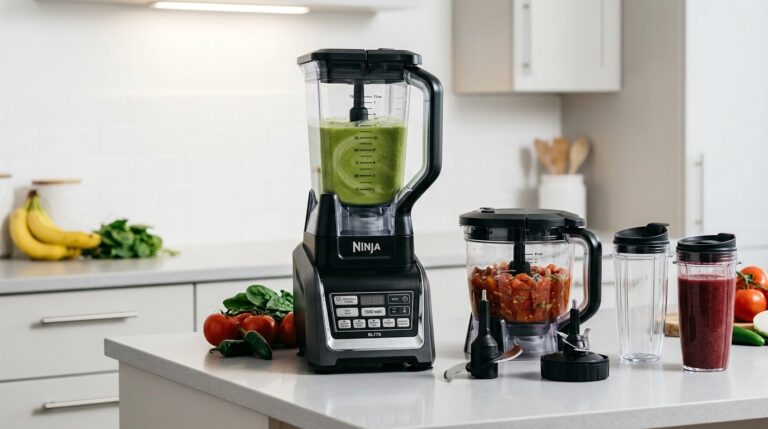
The Ninja UltraCrush is a full-size countertop blender built around a 1000-watt motor, paired with an extra-large 72-ounce pitcher. The combination is designed to accommodate larger batches than most personal blenders can manage, while still offering enough motor power to process denser or tougher ingredients like ice and frozen fruit.
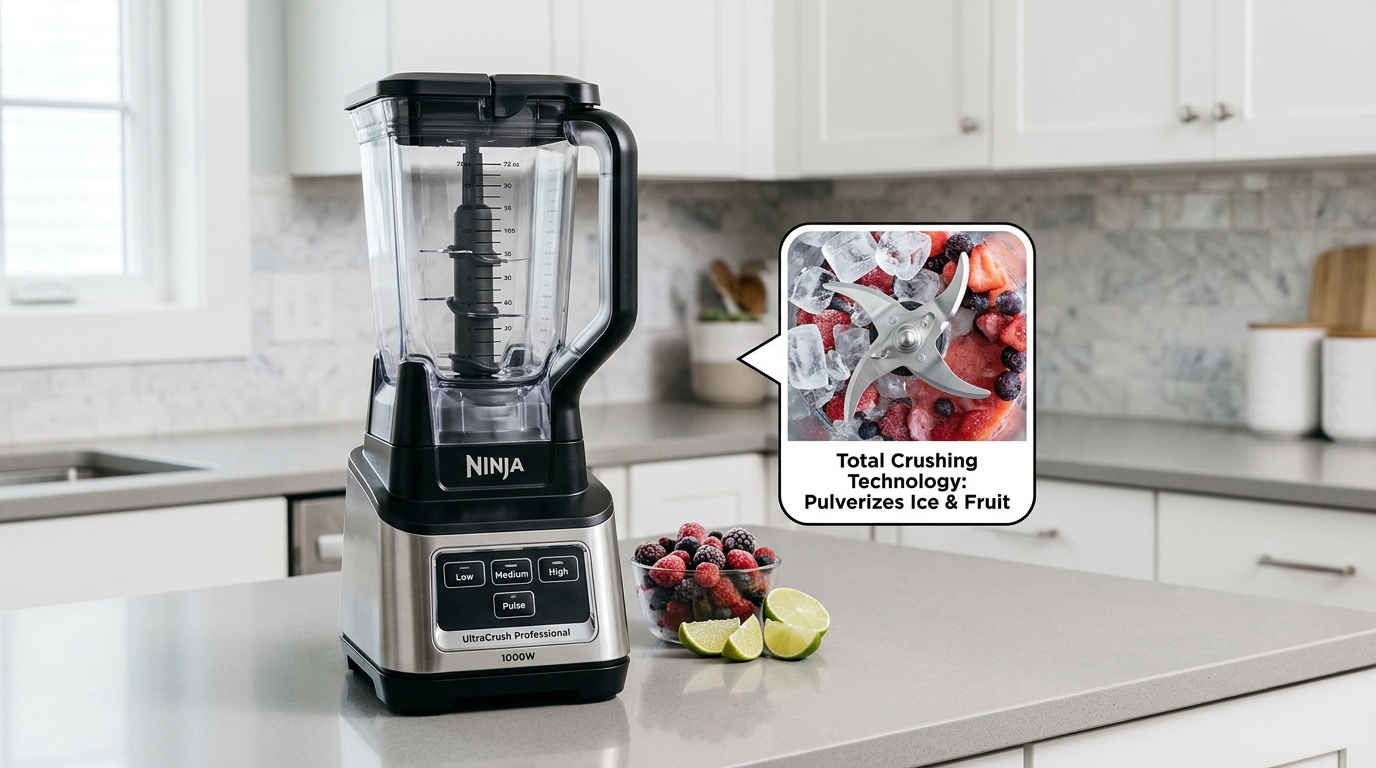
Rather than relying on programmed presets, this model uses three manual speed settings along with a pulse function, giving users direct control over blending intensity depending on the task at hand. The manufacturer describes the blade and pitcher design as Total Crushing Technology, intended to help pull ingredients down into the blades more consistently throughout the blending cycle. Its core purpose is to serve as a dependable, full-capacity blending solution for households that regularly need to prepare larger quantities of blended foods and drinks.
Key Features
1000-Watt Motor
At the center of this blender is a 1000-watt motor, designed to provide enough power to process denser ingredients such as ice, frozen fruit, and fibrous vegetables. A motor in this wattage range is generally intended to deliver more consistent results across a wider variety of recipes than lower-powered blenders, though actual performance can still vary depending on ingredient type and how the pitcher is loaded.
XL 72-oz Pitcher
The 72-ounce pitcher stands out as one of the more practical features of this model, designed to accommodate larger batches within a single blending session. This capacity may be particularly useful for families, gatherings, or anyone who prefers to prepare several servings at once rather than working through multiple smaller batches.
Total Crushing Technology
This term refers to the blade and pitcher geometry the manufacturer has built into the design, intended to help draw ingredients down toward the blades more evenly throughout blending. The goal behind this kind of design is generally to reduce the need for manual stirring or scraping down the sides mid-blend, particularly when processing ice or frozen ingredients.
Three Manual Speeds Plus Pulse
Rather than relying solely on programmed cycles, this blender offers three manual speed settings along with a separate pulse function. This is designed to give users direct control depending on the consistency they’re aiming for — lower speeds tend to suit gentler tasks like mixing batter, while higher speeds are generally intended for tougher jobs like crushing ice. The pulse function adds a layer of control for shorter, more targeted bursts of blending, which can be useful for achieving a specific texture without over-processing.
Full-Size Countertop Design
Unlike compact personal blenders, this model is built as a full-size countertop appliance, intended to remain a semi-permanent fixture for households that use a blender regularly across a variety of tasks. The larger housing and pitcher size reflect a focus on capacity and versatility rather than portability.
Dishwasher-Safe Components
The pitcher and related parts are designed to be dishwasher safe, which may simplify cleanup for households that use the blender frequently and would rather avoid hand washing a large pitcher after every use.
Materials and Design
The exterior of the UltraCrush follows a fairly functional, no-frills design, generally intended to fit into most kitchen styles without drawing much attention to itself. The base houses the 1000-watt motor, which tends to be heavier and more substantial than what’s found in compact or personal blenders, helping keep the unit stable during higher-speed blending.
The pitcher itself is typically constructed from a durable, BPA-free plastic material, chosen for its resistance to cracking under repeated use with ice and frozen ingredients. The blade assembly, generally made from stainless steel, is designed with multiple blade angles intended to help pull ingredients downward and process them more evenly throughout the larger pitcher.
The control panel keeps things fairly simple, reflecting the manual dial and pulse button design rather than a digital interface with programmed cycles. This straightforward layout may appeal to users who prefer tactile, direct control over their blending sessions rather than relying on preset programs to make decisions for them.
Performance
The intended performance of this blender centers on its ability to process a wide range of ingredients — from soft fruits to ice and frozen produce — into a smooth, consistent texture. The 1000-watt motor, combined with the Total Crushing Technology blade design, is intended to distribute blending power evenly throughout the larger 72-ounce pitcher, which may help reduce the likelihood of unblended pockets settling near the bottom or sides during a cycle.
Because the pitcher is considerably larger than what’s found on personal blenders, performance can vary depending on how full it is and the ratio of liquid to solid ingredients used. As with most blending appliances, adding liquid before solid or frozen ingredients is generally recommended to help support more consistent results throughout the pitcher.
It’s also worth keeping in mind that blending performance is influenced by factors outside the appliance itself — ingredient size, how frozen items are before blending, and individual recipe choices can all affect the final outcome, so some variation between households and uses is reasonable to expect.
Common Uses
This type of full-size, manually controlled blender tends to see regular use for:
- Family-sized smoothies, thanks to the large 72-ounce pitcher, which may reduce the need to blend in multiple rounds.
- Frozen drinks and shakes, given the motor’s design for handling ice and frozen fruit.
- Sauces and dressings, particularly for anyone preparing larger batches to store or share.
- Pureed soups, especially varieties that benefit from a powerful motor and generous pitcher capacity.
- Pancake or waffle batter, using the lower manual speed settings for gentler mixing.
- Meal prep for gatherings, where the larger pitcher may help cut down on overall preparation time compared to smaller personal blenders.
Advantages
- Generous batch capacity: The 72-ounce pitcher may be particularly useful for families or gatherings needing multiple servings at once.
- Strong motor output: A 1000-watt motor is generally designed to handle tougher ingredients like ice and frozen fruit more effectively than lower-wattage blenders.
- Direct manual control: Three speed settings plus pulse offer flexibility for a range of tasks, from gentle mixing to more intensive crushing.
- Broad everyday versatility: Beyond smoothies, the appliance may be suitable for soups, sauces, and batters, extending its usefulness well past basic beverage-making.
- Durable, stable construction: The full-size housing and motor base are generally designed to stay steady during higher-speed blending sessions.
- Dishwasher-safe design: This can meaningfully reduce cleanup time compared to pitchers that require exclusively hand washing.
Things to Consider
A handful of practical points are worth weighing before making a decision:
- Counter and storage space: As a full-size appliance, it takes up more room than compact personal blenders, so measuring available space beforehand is a reasonable step.
- Weight and portability: Full-size blenders with larger motors tend to be heavier, which may make them less convenient to move around frequently compared to smaller units.
- More than needed for single servings: For those who mostly prepare individual drinks, a compact personal blender may be more practical and quicker to clean.
- Cleaning a larger pitcher: The 72-ounce capacity means more surface area to clean after each use, which may take slightly longer than smaller blending cups.
- Noise during operation: Higher-wattage motors can produce more noise while running, which may be worth considering for households sensitive to appliance sound. Suitability ultimately depends on individual preferences and typical use patterns.
Comparison with Similar Product Categories
Compared to compact personal blenders, full-size models like this one are generally built for larger batches and broader versatility, offering higher wattage and a significantly bigger pitcher. Personal blenders, by contrast, tend to be better suited to single servings and portable convenience, given their smaller cups and more modest power output.
Compared to premium or high-performance blending systems, this model generally sits in the mid-to-upper range in terms of motor power, delivering solid everyday performance without necessarily matching the specialized capabilities — such as built-in heating functions or programmable presets — found in some higher-end units.
Compared to food processors, blenders like this one are generally better suited to liquid-based preparations such as smoothies, soups, and sauces, while food processors tend to be designed for chopping, slicing, or shredding solid ingredients with less liquid involved. Which category makes more sense typically comes down to what kind of food preparation a household does most regularly.
Maintenance and Care
Keeping up with routine maintenance can help preserve the performance and longevity of a full-size blender like this one. General care recommendations typically include:
- Rinsing the pitcher soon after use, since ingredients like smoothies or sauces tend to become harder to clean once they’ve had time to dry.
- Using the dishwasher-safe pitcher and blade assembly as intended, or hand washing if preferred, following the specific care instructions included with the appliance.
- Avoiding submerging the motor base in water, since it houses electrical components that need to stay dry.
- Drying all components fully before reassembling or storing, helping to prevent trapped moisture or lingering odors.
- Checking the blade assembly periodically for wear, particularly if the blender sees frequent use with ice or frozen ingredients.
- Storing the pitcher and lid separately when not in use, allowing for better air circulation and reducing the chance of residual smells.
Reviewing the manufacturer’s specific cleaning and care instructions remains the most reliable way to maintain the appliance’s condition, since guidelines can vary somewhat depending on the exact model specifications.
Frequently Asked Questions
1. What’s the capacity of the pitcher on this blender? The pitcher holds an extra-large 72 ounces, designed to accommodate larger batches in a single blending session.
2. Can this blender effectively crush ice? The 1000-watt motor, paired with Total Crushing Technology, is designed to help process ice and frozen ingredients, though results can vary depending on ingredient load and ratio.
3. How many speed settings does this model offer? It includes three manual speed settings along with a separate pulse function, allowing for more direct control over blending intensity.
4. Is the pitcher dishwasher safe? Yes, the pitcher and related components are generally designed to be dishwasher safe, simplifying regular cleanup.
5. Can this blender be used to make soup? Yes, the motor power and pitcher capacity are generally well suited to blending pureed soups, among other tasks.
6. Is this blender a good fit for a larger family? The 72-ounce pitcher is designed to accommodate bigger batches, which may be useful for families or gatherings needing multiple servings.
7. What material is the pitcher made from? Pitchers on blenders like this are typically made from BPA-free plastic or a similarly durable material designed to withstand frequent use.
8. Does this blender require manual stirring while it runs? The Total Crushing Technology blade design is intended to reduce the need for manual stirring, though results may still depend on ingredient consistency and load.
9. Can this blender handle batters? Yes, using one of the lower manual speed settings may be suitable for gentler tasks like mixing pancake or waffle batter.
10. How much counter space does this blender need? As a full-size countertop appliance, it generally requires more space than compact personal blenders, so measuring counter area beforehand is a reasonable step.
11. Is this blender particularly loud when running? Higher-wattage motors tend to produce more noise compared to lower-powered appliances, which may be worth factoring in for noise-sensitive households.
12. Can this blender process frozen fruit for smoothies? Yes, the motor and blade design are intended to handle frozen fruit as part of typical smoothie preparation.
Final Thoughts
The Ninja UltraCrush Professional Blender BP201 fits into a segment of the blender market that favors straightforward, manual control paired with genuine capacity and power. With a 1000-watt motor, an extra-large 72-ounce pitcher, and a simple three-speed-plus-pulse control system, it’s designed to serve households that value both versatility and batch size over programmed presets or elaborate digital interfaces.
As with any kitchen appliance, whether this particular model is the right fit ultimately depends on factors like household size, available counter space, and the range of foods a person typically prepares. Reviewing the manufacturer’s specifications and care instructions ahead of time can help set realistic expectations regarding performance and long-term maintenance.